
In the Little Composters Community, we believe that taking care of the Earth starts with easy solutions that can happen right in the classroom or at home, and there’s no better time to get kids excited about the environment than right now! Teaching children about composting doesn’t have to be complicated. In fact, it can be super fun and hands-on, and is one of my favorite activities to do when I visit and volunteer in classrooms.
As the Little Composters project has evolved over the last few years, I’ve had a lot of experience working with kids and teaching composting specifically. In the last two years, I’ve worked with over 1,000 kids with ages ranging from 2-12 and have had to do a lot of trial and error when it comes to kids and composting. So here I’m going to walk you through the methods and activities I use and do to teach composting alongside some of my most helpful tips.
1. Ask them about what they already know
Asking the kids about what they already know is always my first step when I begin working with a group. Not only does it help you get an idea of what to teach them, but it also allows them to exercise their critical thinking skills and share their thoughts and ideas with you and the rest of the group. I always try to tailor the questions and how I word them to the age group of the kids I’m working with for example with a pre-k group I might start by asking if they know what worms are or have ever held one, and with a 5th grade group I might ask something more advanced like if they know what composting is and how it works.
2. Read a Book or show a presentation about Composting
After I’ve gotten a good idea of what the kid’s knowledge of the topic is, I like to read a book or give a short presentation or video that explains the process, what it is, how it works, and why it’s important. Books and presentations are great ways to keep kids engaged and focused on your topic. Small picture books usually work well for younger age groups, and videos and presentations work better with older age groups. Below, I’ll include a few good examples.
I highly recommend Compost Stew by Mary McKenna Siddals for younger audiences, or if you’re looking for something newer or less specific, you can also check out my book, which I just published a few months ago. The book I created focuses on what composting is and how our planet benefits from it, and includes a simple-to-follow composting guide in the back. The book introduces kids to the concept in a fun, age-appropriate way and is great for pre-k through 2nd grade. Purchasing my book also helps to support this page and my community service efforts, as all proceeds go towards building and expanding the Little Composters project. If you are interested, you can check out my book by clicking on the link below! Or you can check out the teacher resources page for a free Downloadable PDF.
If you’re looking for a good online presentation, you can check out this video lesson on our YouTube channel.
3. Make a “Can it go? Yes or No?” Game
Once they have a basic idea of what composting is, I set up a game I call “Can it go? Yes or No?”. This is basically where I have the kids guess what foods can and can’t be composted. You can do this using actual foods, or you can print out the food cards to make it a little less complicated for classroom use. I ask the kids if it can go into the compost bin, and they give me a thumbs up or thumbs down based on their answer, and then together we sort the different foods. Is that banana peel compostable? What about a plastic wrapper? Let them guess and try to figure out what can and can’t go into the bin.
Check out my post All About Composting for a list of what foods go where and a simplified teacher guide on how composting works.
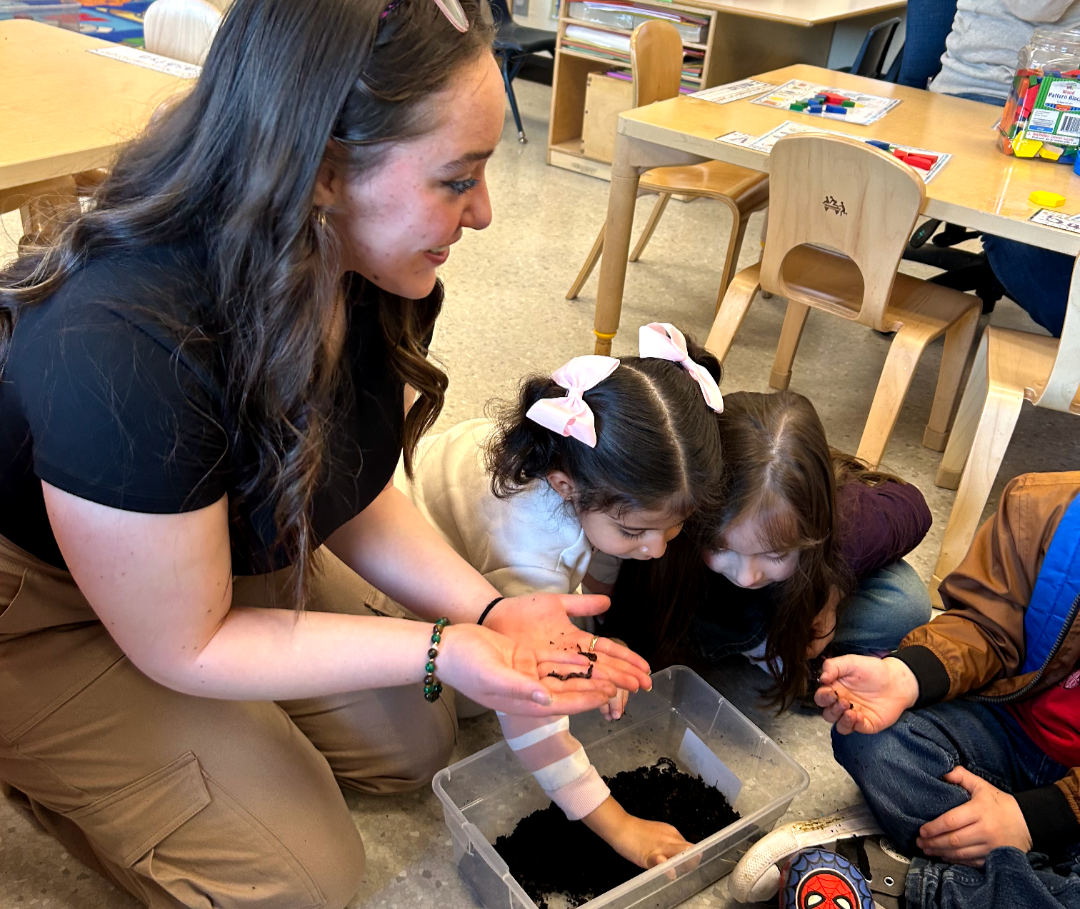
5. Let them hold the worms
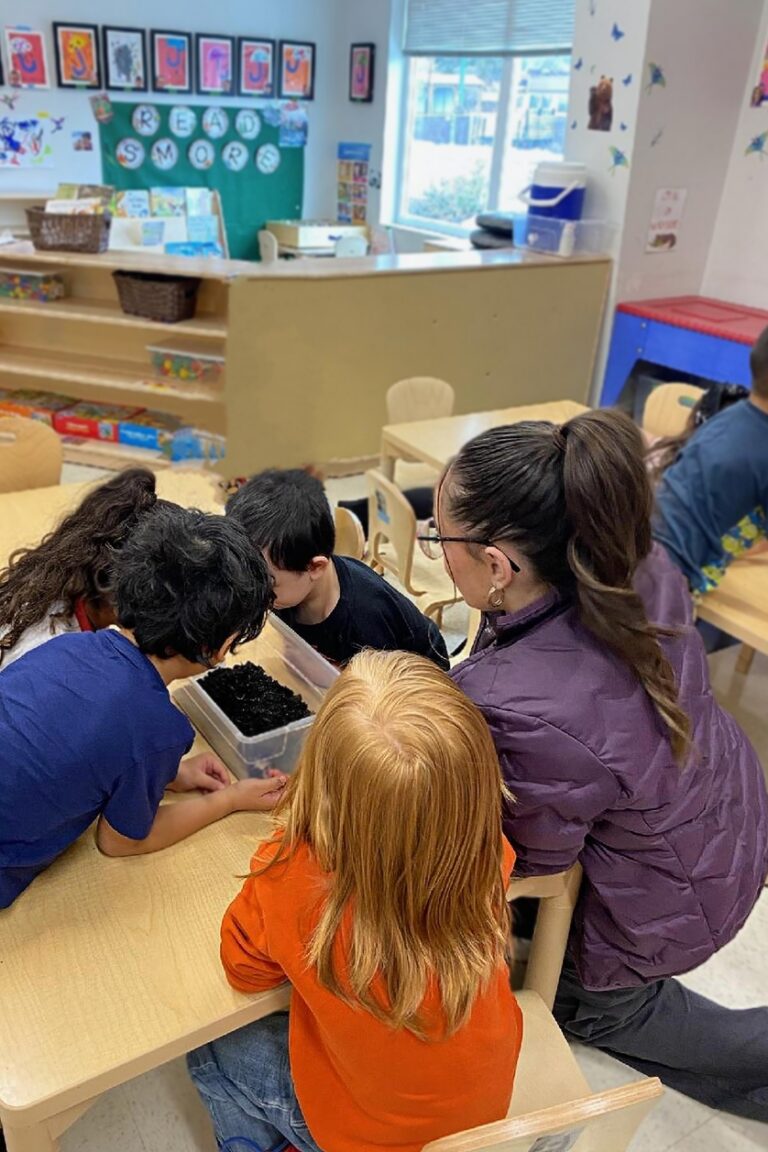
This part is always hit or miss. Some kids love holding the worms and others hate it, and that’s okay, it’s not for everyone. But either way, I always give the opportunity to the kids who want to. I’ve found that the more the kids interact with wildlife and nature, the more of a connection they build to it and the more empathy and respect they build for it.
6. Let Them Help Build the Compost Bin
Whether you’re using one of our donated compost kits or building your own from scratch, invite kids into the process! Let them dig, mix, and layer the soil; it’s like making a recipe! I often like to describe the layers of the compost bin as a compost cake. Letting the kids dig around and play in the dirt is messy, but so worth it! Hands-on learning helps the kids to understand concepts better and helps to keep them excited and engaged in the activity.
7. Grow Something from the Ground Up
Once your compost is ready, use it to start a kid-friendly garden! Planting veggies, herbs, or even wildflowers in compost-rich soil lets children see the full cycle—from food scraps to new growth.
Let’s raise the next generation of changemakers
When we teach kids how to compost and care for the environment, we’re not just helping the planet—we’re building future changemakers. Someday, the well-being of our planet is going to pass on to the next generation and will no longer be in our hands. The children of today are the leaders of tomorrow. That’s why it’s imperative that we teach them the importance of caring for our planet, a process that can be made simple and fun with the Little Composters Classroom Program.
Do you have composting questions or want to share your child’s or class’s compost or garden? We’d love to see it! Tag us or send it our way. Together, we’re growing something amazing.